Object 02 · 2019–2026
The Dragon Picks
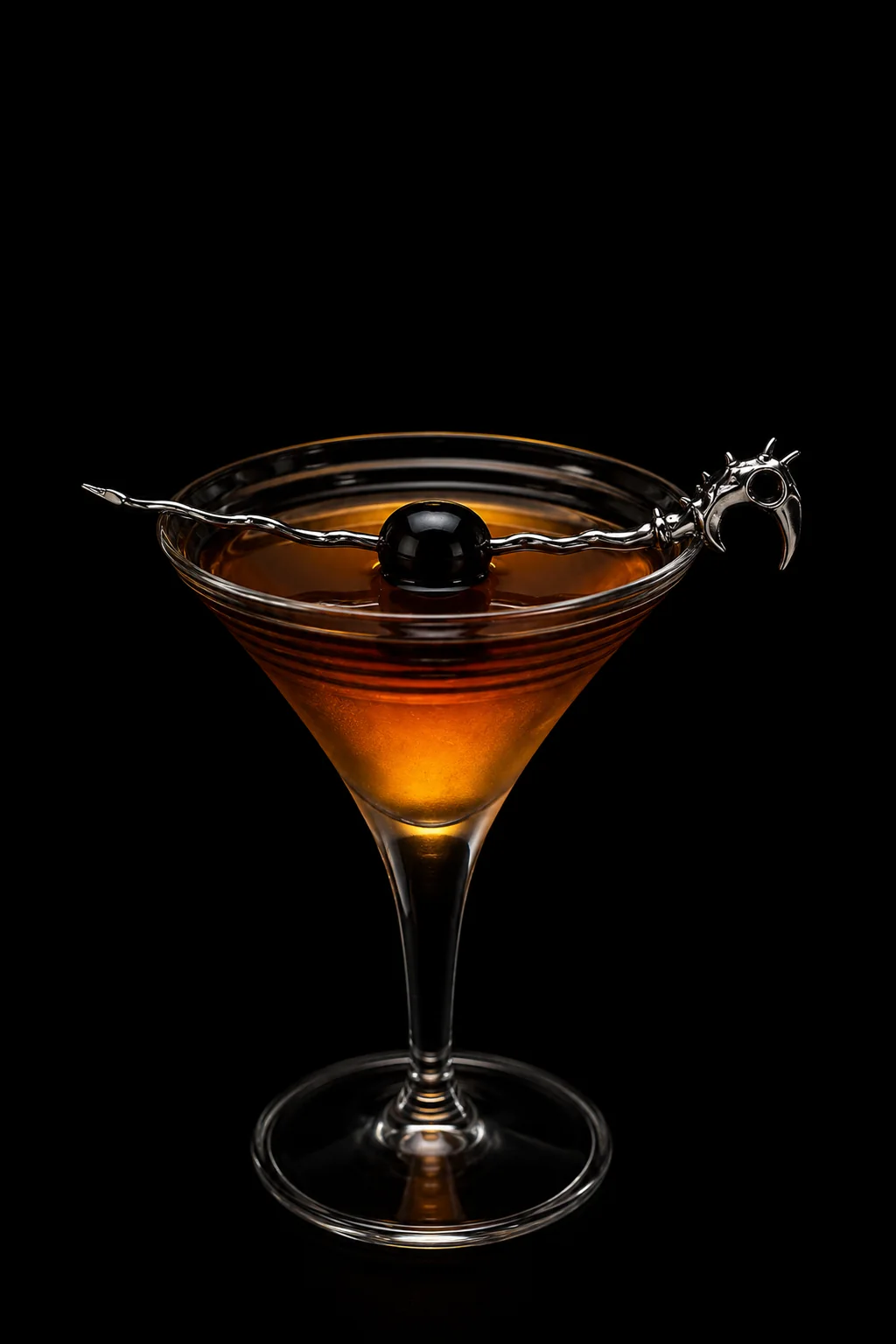
Four chrome dragons for olives, cherries, and other small treasures.
A custom speaker gift for VIEW Conference 2026. Now live on Kickstarter.
Back on Kickstarter (opens in a new window)Watch the Dragon Picks story
Film · 1 min 4 secFrom a sketch to a real chrome dragon for your cocktail.
Back on Kickstarter (opens in a new window)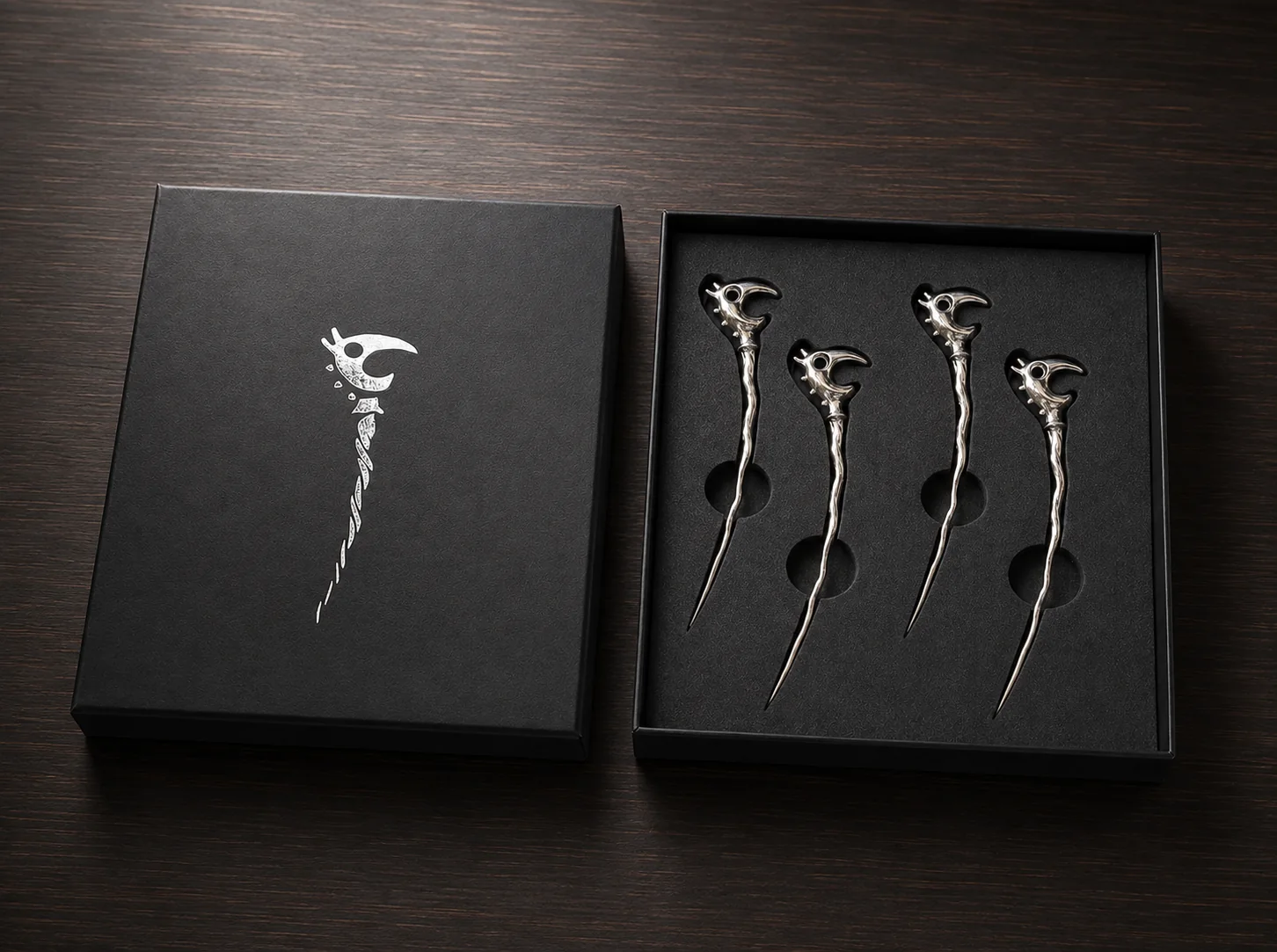
The first edition
Four dragons. One very serious box.
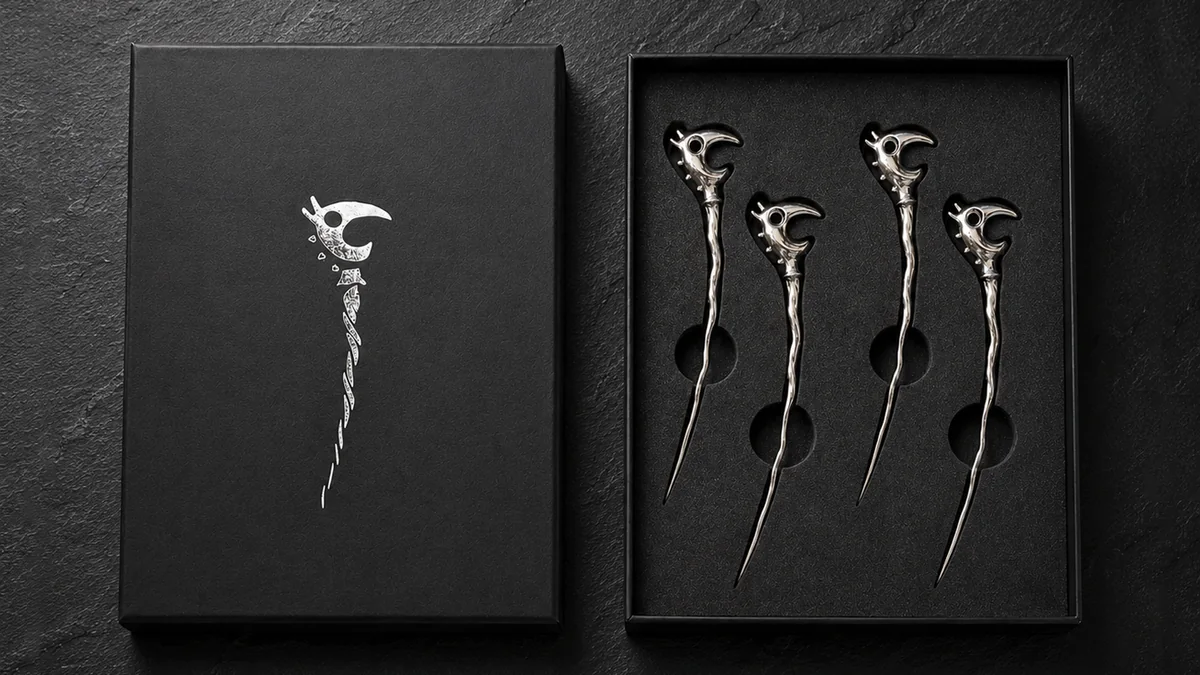
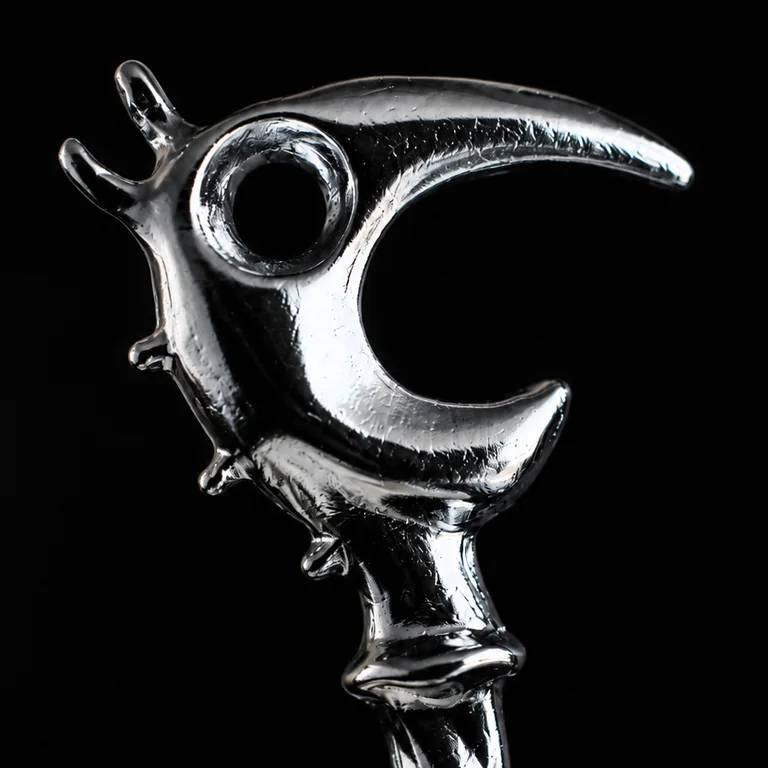
The finished set holds four 4.25-inch Dragon Picks: solid zinc alloy, polished, and finished in bright trivalent chrome. Each one rests in a fitted black insert inside a slim rigid box.
What began as a small sketch is now entering its final production run. That means the finished sets of chrome dragons with custom boxes are becoming reality … tiny art for cocktails.
- Set
- Four picks
- Length
- 4.25 inches
- Material
- Solid zinc alloy
- Finish
- Trivalent chrome
- Use
- Food-safe
- Edition
- 2,000 boxed sets
A cocktail dragon
Naturally, I needed to make these.
My previous project, the Dragon Opener, began as a sketch, became a VR sculpture, and eventually opened bottles in solid metal. A cocktail pick felt like the next logical experiment.
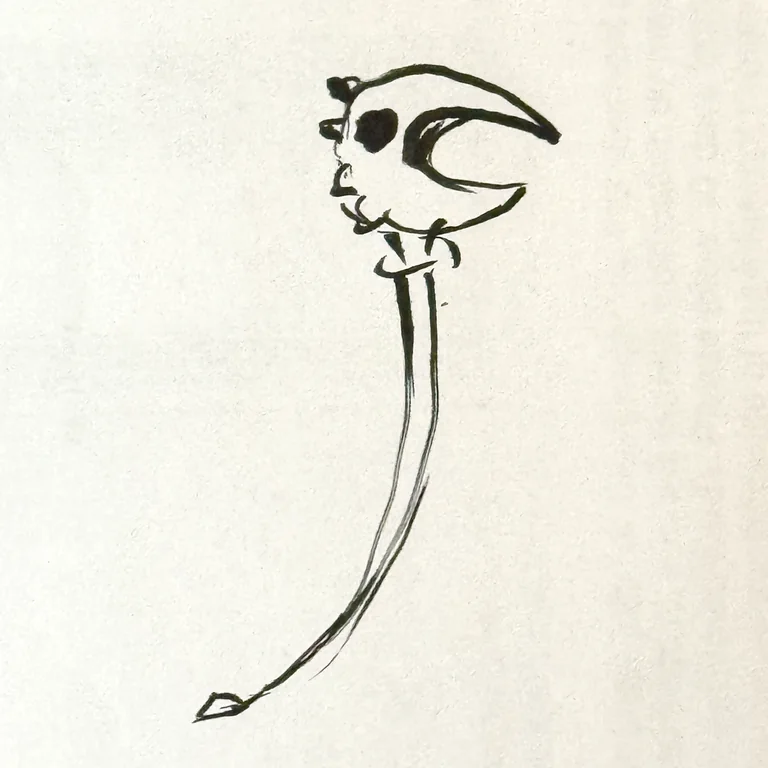
In 2019, I made a quick sketch of a dragon head on a long, slightly crooked stem. Then I jumped into VR to model it, and spent a lot of time refining the basic idea of a cocktail pick. I wanted something to class up my cocktails.
I work professionally making art with computers, and digital art is nice, but intangible. There is something satisfying about making a real object … seeing something I’ve created in VR become a piece of physical and functional tiny art that I can hold in my hand is amazing.
2019–2021
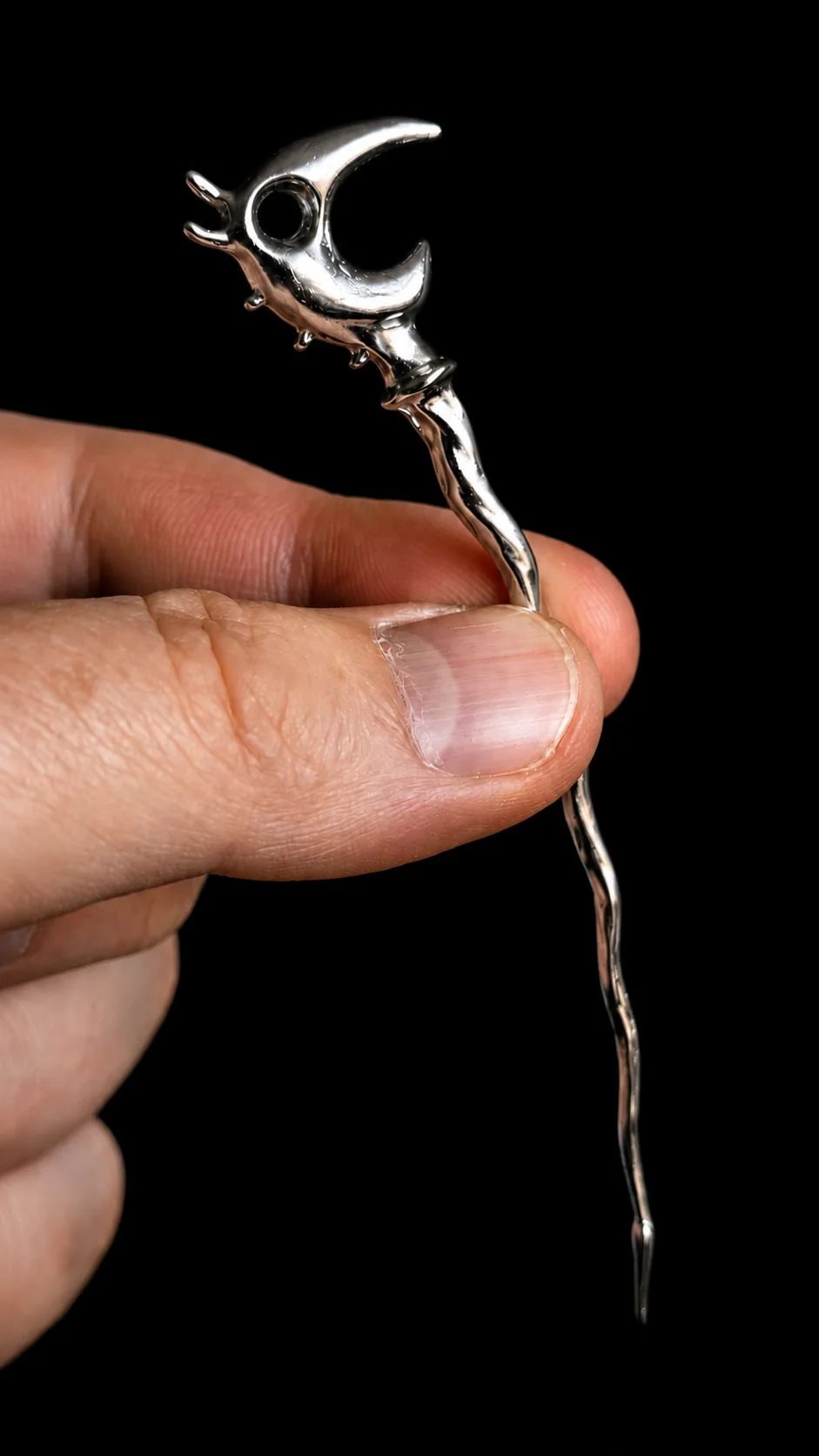
The first metal prototype.
I built the drawing as a digital sculpture in VR, where the head had to read from every angle and at a very small scale. I used AR to size it in my hand and RenderMan to study the silhouette in metal. On a screen, it seemed promising.
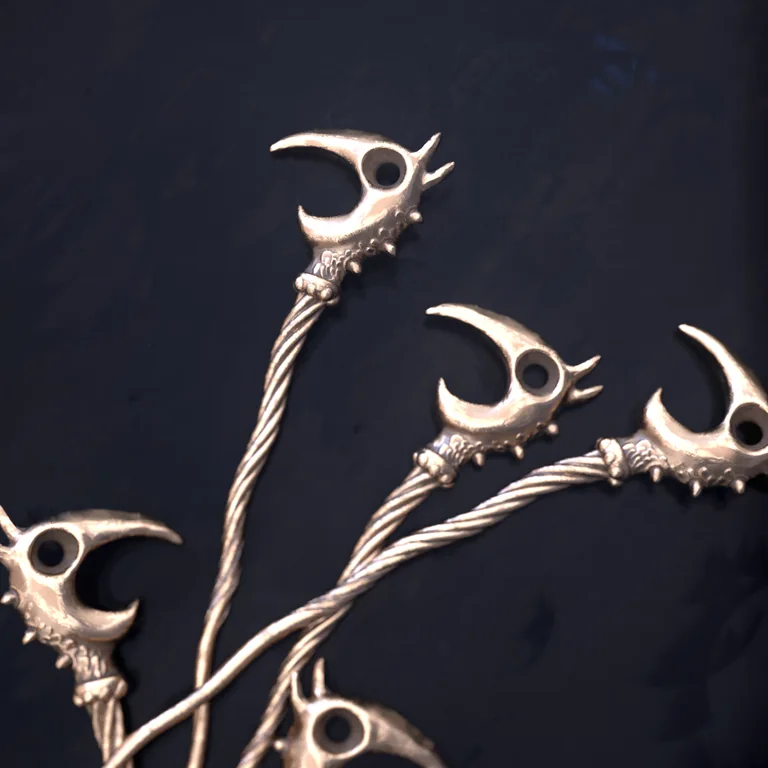
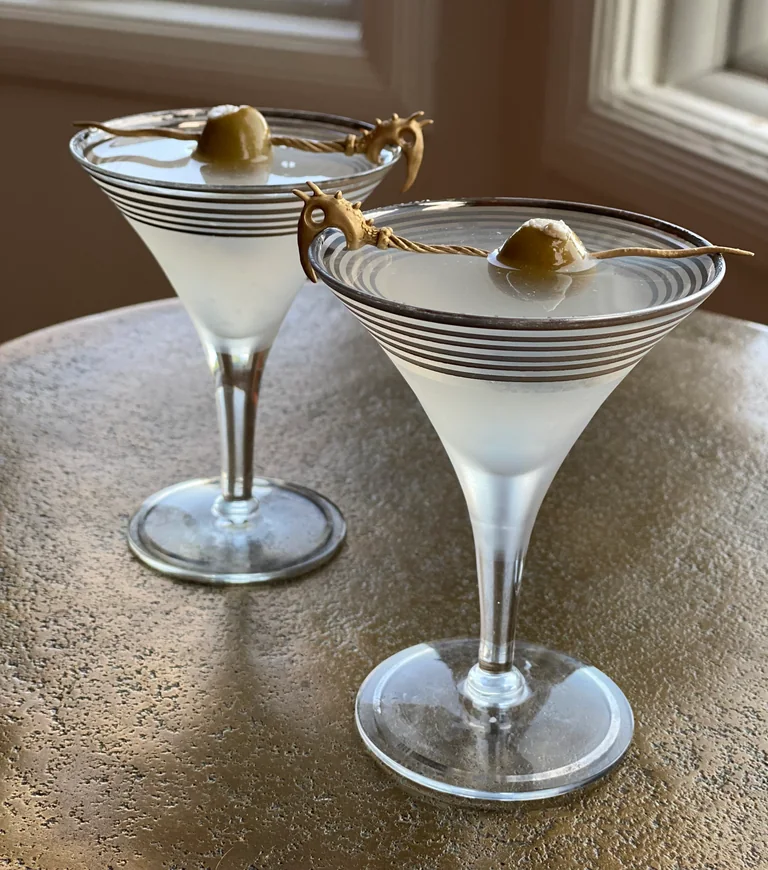
I produced the first physical picks in 2021. They were metal 3D prints from Shapeways. They worked. The dragon pick spanned the glass, held an olive, and proved the open mouth still read at cocktail scale. They also bent. Some details were too fine, and producing an edition this way would have been ruinously expensive. The prototypes proved the object. They did not solve the manufacturing.
Designing for the mold
The realities of manufacturing improved the sculpt.
In 2026, I sent the design to the manufacturer who made the Dragon Opener. We considered all the options: stainless steel, metal printing, powder forming, lost-wax casting, and zinc die casting. The latter looked most promising.
Then the mold maker pointed out one inconvenient detail: the open mouth created an undercut that could lock the Pick inside the die. The thin stem also risked deforming during polishing.
So I flattened the inner mouth, simplified the transition into the stem, removed details that would not polish consistently, and strengthened the shapes that mattered. What first felt like compromise made the profile cleaner. The mold was no longer something that happened after the design. It had become part of the design.
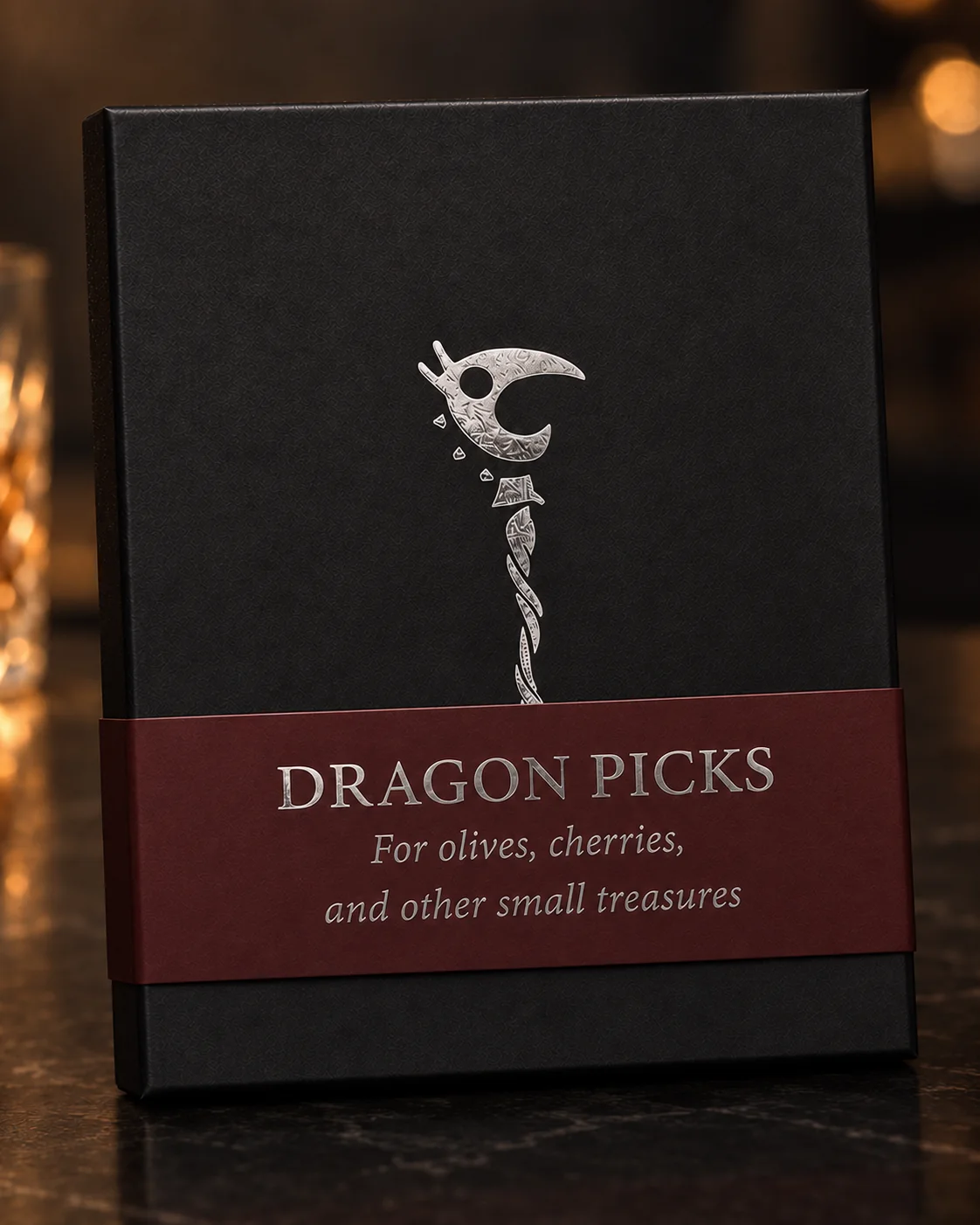
A box for four dragons
Custom Packaging
The packaging could be anything, and I wanted a premium presentation. My first idea was an elaborate book-like folio in black bookcloth. The printers studied it and, with admirable efficiency, explained that it required too much handwork and too much money.
We kept the useful parts. The folio became a slim rigid box in textured black paper, stamped in silver and held closed by a burgundy wrap. Inside, four Picks rest in a custom-cut black insert beneath a printed card.
The picks are seated inside the box with EVA foam, and we added just enough clearance around the dragon heads so the heads are showcased nicely in the box. Apparently even the empty space around a dragon requires design.
VIEW Conference + Kickstarter
From VIEW to your bar.
VIEW Conference gave the project a reason, a deadline, and its first audience: the Dragon Picks will be a speaker gift at VIEW 2026 in Turin.
Producing them properly meant committing to a full edition. The physical samples are approved and production is underway. Kickstarter lets part of that edition travel beyond the conference.
The campaign is now live for cocktail people, object people, and anyone who thinks an olive deserves better hardware.
Back on KickstarterNow live (opens in a new window)